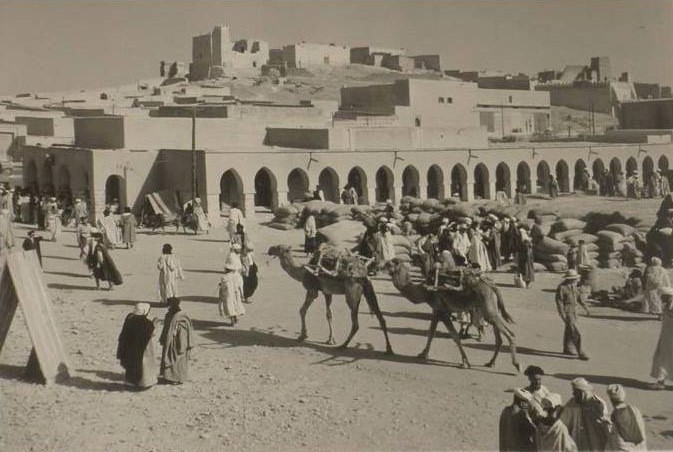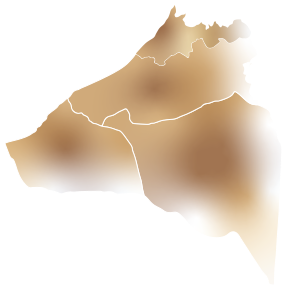
The Guelmim-Oued Noun region is distinguished by its rich historical past, closely tied to its strategic geographic position, which has made it a crossroads of civilizations and a center of trade and cultural exchanges between the north and south of Morocco over the centuries. For centuries, this region served as a key stop for commercial caravans connecting Morocco to the depths of Africa, thriving due to its role as a bridge between the civilizations of the Maghreb and Sub-Saharan Africa.

Trade in the Oued Noun region:

Since the arrival of Muslims in North Africa, the Oued Noun region experienced a significant commercial boom, particularly with Western Sudan. It benefited from its natural resources, such as gold, salt, and ivory. Trade relations were closely linked to local political systems, which prioritized the protection and control of Saharan trade routes. These exchanges played a crucial role in the stability of political regimes, from the Almoravid era to the Alaouite state.

Talking about trade in the Oued Noun region also highlights the role of some of its cities, notably Noul Lamta, which emerged in the 11th century with the Almoravids, followed by Tekaoust in the 13th century, and finally Guelmim, which took over from the 18th century, especially in the 19th century. These cities were key stops for Saharan caravans, facilitating the exchange of goods and ideas between Sub-Saharan Africa and the north. They also played a crucial role in integrating Saharan trade with Mediterranean exchanges in the Middle Ages and Atlantic ports in modern and contemporary times, supplying major capitals like Marrakech and Fès. The region was connected to other cities in Western Sahara and Western Sudan through various trade routes influenced by economic, tribal, religious, cultural, and political developments.

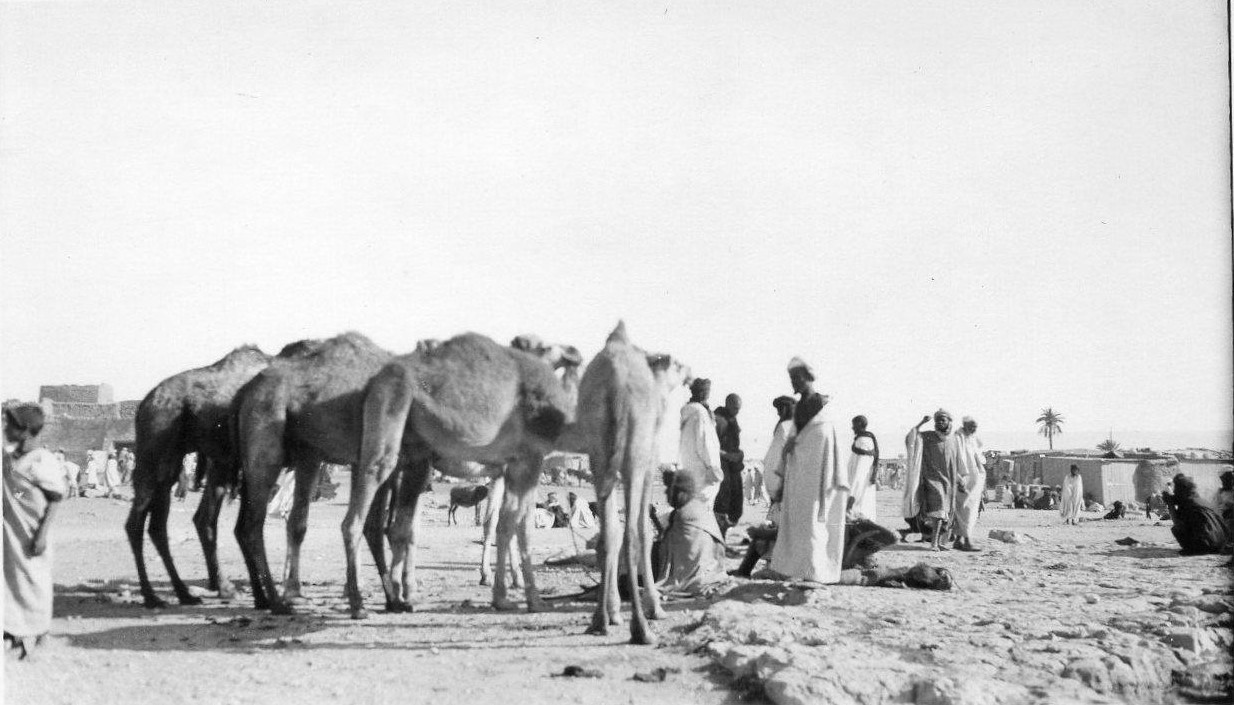
The Amhirich market in Guelmim, established for over three centuries, is an important economic center and a recognized commercial space both nationally and internationally, spanning over three hectares.

This market, one of the most famous camel markets in Morocco, witnesses intense commercial activity with dozens of camels and livestock of various categories. It also has a modern space dedicated to the sale of fruits, vegetables, grains, and other products.

Rich cultural heritage:

The region occupies an important place, having been the site of dynamic exchanges of cultures and civilizations throughout the ages. The fortresses and historical ruins bear witness to this, expressing a rich and varied heritage that tells the story of the region across time.

The region is also distinguished by a diverse cultural heritage that includes numerous Amazigh, Arab, and Saharan tribes. It has successfully blended its varied legacy, combining customs and traditions to form a rich cultural tableau. This is reflected in local traditions, craftsmanship, folklore, as well as Hassani poetry, culinary arts, and clothing traditions. These elements form an essential part of the region’s unique identity, making it an exceptional destination to explore and visit.
The Guelmim-Oued Noun region is distinguished by its rich historical past, connected to its strategic geographic position, which has made it a crossroads of civilizations and a center for trade and cultural exchanges between the north and south of Morocco over the centuries. For centuries, this region served as a key stop for commercial caravans linking Morocco to the depths of Africa, thriving in its role as a bridge between the civilizations of the Maghreb and Sub-Saharan Africa.

Trade in the Oued Noun region:

Since the arrival of Muslims in North Africa, the Oued Noun region experienced significant commercial growth, especially with Western Sudan. The region benefited from its natural resources, such as gold, salt, and ivory. Trade relations were closely tied to local political systems, which prioritized the protection and control of Saharan trade routes. These exchanges played a crucial role in the stability of political regimes, from the Almoravid era to the Alaouite state.

Trade in the Oued Noun Region:

Discussing trade in the Oued Noun region requires highlighting the role played by some of its key cities. Noul Lamta emerged in the 11th century under the Almoravids, followed by Tekaoust in the 13th century, and finally, Guelmim, which took over from the 18th century, particularly during the 19th century. These cities were vital stops for Saharan caravans, facilitating the exchange of goods and ideas between Sub-Saharan Africa and the north. They also played a crucial role in integrating Saharan trade with Mediterranean exchanges during the Middle Ages and with Atlantic ports in modern and contemporary times, supplying major cities like Marrakech and Fès. The region was connected to other cities in Western Sahara and Western Sudan through various trade routes, influenced by economic, tribal, religious, cultural, and political developments.

The Amhirich market in Guelmim, established for over three centuries, is an important economic center and a renowned commercial hub both nationally and internationally, spanning more than three hectares.
This market, one of the most famous camel markets in Morocco, sees intense commercial activity with dozens of camels and livestock from various categories. It also features a modern space for the sale of fruits, vegetables, grains, and other products.

Rich Cultural Heritage:

The region holds an important place as a site of dynamic exchanges of cultures and civilizations throughout the ages. Fortresses and historical ruins bear witness to this, expressing a rich and varied heritage that tells the story of the region over time.

The region is also distinguished by its diverse cultural heritage, encompassing numerous Amazigh, Arab, and Saharan tribes. It has successfully blended this varied legacy, combining customs and traditions to create a rich cultural mosaic. This is reflected in local traditions, craftsmanship, folklore, as well as Hassani poetry, culinary arts, and traditional clothing. These elements form a vital part of the region’s unique identity, making it an exceptional destination to explore and visit.
Guelmim experienced significant prosperity during the Almoravid period, as it was an important commercial center. The city of “Noul Lamta” emerged as one of the prominent urban centers during the 7th and 8th centuries, with its ruins currently located near the village of Asrir.

Guelmim’s position as a major stop for caravans heading to Timbuktu was reinforced, and it witnessed active trade between local inhabitants and nomads, becoming an important hub for the trade of gold, ivory, dates, and salt. It also played a notable role in resisting French colonization and continued to grow in both population and economy, especially after the establishment of the Guelmim province in 1979.

Today, Guelmim is an administrative and commercial center for the Guelmim province, characterized by a rich culture that blends Bedouin traditions with Amazigh-Arab civilization. The city is famous for its traditional markets and its annual “Camel Festival,” which attracts visitors from all over Morocco. It is also distinguished by stunning landscapes that include golden sand dunes and lush palm oases, making it a unique tourist destination.

Guelmim carries a rich history and is a testament to successive civilizations, and today it is a modern city that preserves its heritage while striving for a bright and prosperous future.

The city of Tan-Tan was founded in 1940 during the Spanish colonial period. After the joint military operation “Écouvillon” in February 1958, displaced populations began to settle in Tan-Tan. In April 1958, the Spanish granted independence to the province of Tarfaya, of which Tan-Tan was a part. To strengthen the region, the Moroccan government decided to create a “free zone” in Tan-Tan.

After the recovery of the Saharan provinces by Morocco in 1975, Tan-Tan became a key center for the Green Marches and emerged as an essential logistical base for this operation. In 1978, King Hassan II inaugurated the Louatia port, further boosting Tan-Tan’s economic role along the Atlantic coast. Since the late 1950s, Tan-Tan has become one of the main sardine ports in Morocco.

Additionally, the annual Tan-Tan festival attracts nomadic tribes to celebrate cultural heritage. The region is also home to archaeological sites such as rock engravings and fossils, while preserving many ancestral traditions, including traditional cuisine and ancient crafts.

Sidi Ifni is located in southwestern Morocco, about 50 kilometers from Guelmim, overlooking the Atlantic coast. The city derives its name from the sanctuary of Sidi Ali Ifni and was once called “Santa Cruz de la Mar Pequeña” by the Spanish. Occupied by Spain in 1934, the Spanish sought to transform it into a city resembling their own. However, the Aït Baâmrane tribes played a crucial role in resisting this colonization, notably during the 1957 uprising in response to Spanish attempts at naturalization. This revolt led to the return of Sidi Ifni to Morocco in 1969, solidifying its significance in the national memory as a symbol of the struggle for the liberation of the Moroccan Sahara provinces.

The city is home to several historical monuments dating back to the colonial era, such as the old consulate building, the church that has been converted into a courthouse, as well as the cable car and the Sidi Ifni lighthouse, which has become an emblematic symbol of the city. These remnants reflect a rich history of struggle and resistance.

Economically, Sidi Ifni relies mainly on fishing, with its port being a major center for fish exports, particularly sardines. The city is also known for the cultivation of cacti and argan trees, providing seasonal jobs for women in rural areas. Tourism also plays an important role, with visitors drawn to its beautiful beaches like Mirleft and Legzira, which contribute to the local economy.

The city of Assa is one of the most important historical towns in the Moroccan Sahara region. Located between the Bani and Ouarkziz mountains, it stands out for its unique natural landscapes. Its name comes from the word “Tisit,” meaning “lowland,” reflecting its particular topography. Assa is especially known for its ancient ksar, one of the most iconic monuments in the region, which dates back around ten centuries and played a central role in the economic and social life of its inhabitants.

The Ksar of Assa is a symbol of the region’s traditional architecture, built from natural materials such as clay, straw, and palm trees, which allowed it to withstand extreme climatic conditions and offer protection to its residents. In the past, the ksar was a meeting center for local tribes, particularly the Aït Youssef, where they made crucial decisions on economic, political, and social matters. Popular memory still preserves the names of many chiefs who managed the ksar’s affairs.

In addition to its architectural heritage, the Zaouia of Assa is the oldest in the Sahara, founded by the fighting Sheikh “Izza Ou Yahya.” It remains a destination for students from various African countries, who come to memorize the Quran and study religious sciences, language, grammar, and rhetoric.

Guelmim

Guelmim experienced significant prosperity during the Almoravid period, as it was an important commercial center. The city of “Noul Lamta” emerged as one of the prominent urban centers during the 7th and 8th centuries, with its ruins currently located near the village of Asrir.

Guelmim’s position as a major stop for caravans heading to Timbuktu was reinforced, and it witnessed active trade between local inhabitants and nomads, becoming an important hub for the trade of gold, ivory, dates, and salt. It also played a notable role in resisting French colonization and continued to grow in both population and economy, especially after the establishment of the Guelmim province in 1979.

Today, Guelmim is an administrative and commercial center for the Guelmim province, characterized by a rich culture that blends Bedouin traditions with Amazigh-Arab civilization. The city is famous for its traditional markets and its annual “Camel Festival,” which attracts visitors from all over Morocco. It is also distinguished by stunning landscapes that include golden sand dunes and lush palm oases, making it a unique tourist destination.

Guelmim carries a rich history and is a testament to successive civilizations, and today it is a modern city that preserves its heritage while striving for a bright and prosperous future.

Tan-Tan

The city of Tan-Tan was founded in 1940 during the Spanish colonial period. After the joint military operation “Écouvillon” in February 1958, displaced populations began to settle in Tan-Tan. In April 1958, the Spanish granted independence to the province of Tarfaya, of which Tan-Tan was a part. To strengthen the region, the Moroccan government decided to create a “free zone” in Tan-Tan.

After the recovery of the Saharan provinces by Morocco in 1975, Tan-Tan became a key center for the Green Marches and emerged as an essential logistical base for this operation. In 1978, King Hassan II inaugurated the Louatia port, further boosting Tan-Tan’s economic role along the Atlantic coast. Since the late 1950s, Tan-Tan has become one of the main sardine ports in Morocco.

Additionally, the annual Tan-Tan festival attracts nomadic tribes to celebrate cultural heritage. The region is also home to archaeological sites such as rock engravings and fossils, while preserving many ancestral traditions, including traditional cuisine and ancient crafts.

Sidi Ifni

Sidi Ifni is located in southwestern Morocco, about 50 kilometers from Guelmim, overlooking the Atlantic coast. The city derives its name from the sanctuary of Sidi Ali Ifni and was once called “Santa Cruz de la Mar Pequeña” by the Spanish. Occupied by Spain in 1934, the Spanish sought to transform it into a city resembling their own. However, the Aït Baâmrane tribes played a crucial role in resisting this colonization, notably during the 1957 uprising in response to Spanish attempts at naturalization. This revolt led to the return of Sidi Ifni to Morocco in 1969, solidifying its significance in the national memory as a symbol of the struggle for the liberation of the Moroccan Sahara provinces.

The city is home to several historical monuments dating back to the colonial era, such as the old consulate building, the church that has been converted into a courthouse, as well as the cable car and the Sidi Ifni lighthouse, which has become an emblematic symbol of the city. These remnants reflect a rich history of struggle and resistance.

Economically, Sidi Ifni relies mainly on fishing, with its port being a major center for fish exports, particularly sardines. The city is also known for the cultivation of cacti and argan trees, providing seasonal jobs for women in rural areas. Tourism also plays an important role, with visitors drawn to its beautiful beaches like Mirleft and Legzira, which contribute to the local economy.

Assa-Zag

The city of Assa is one of the most important historical towns in the Moroccan Sahara region. Located between the Bani and Ouarkziz mountains, it stands out for its unique natural landscapes. Its name comes from the word “Tisit,” meaning “lowland,” reflecting its particular topography. Assa is especially known for its ancient ksar, one of the most iconic monuments in the region, which dates back around ten centuries and played a central role in the economic and social life of its inhabitants.

The Ksar of Assa is a symbol of the region’s traditional architecture, built from natural materials such as clay, straw, and palm trees, which allowed it to withstand extreme climatic conditions and offer protection to its residents. In the past, the ksar was a meeting center for local tribes, particularly the Aït Youssef, where they made crucial decisions on economic, political, and social matters. Popular memory still preserves the names of many chiefs who managed the ksar’s affairs.

In addition to its architectural heritage, the Zaouia of Assa is the oldest in the Sahara, founded by the fighting Sheikh “Izza Ou Yahya.” It remains a destination for students from various African countries, who come to memorize the Quran and study religious sciences, language, grammar, and rhetoric.